

One hero, no base, no economy, and a dungeon you have not seen before.
That was the request. What it produces is a mode where you round a corner and a room appears. You pick a hero from a character-select screen, choose which faction garrisons the place and which of their heroes is waiting in the boss room, and drop straight into third-person control. After that it is your action bar, your bag, and a door you cannot see past.
Everything difficult about building it came from the same source. A strategy game hangs its camera above a base and looks down. Its fog of war reveals a circle around each unit. Both of those are exactly wrong for a dungeon, where the entire point is that you cannot see what is behind the door and the camera has to sit behind one character's shoulder.
Driving a single hero already existed as a cheat, so the controls were mostly there. What was not there was everything the game had been quietly assuming since it was only ever a strategy game, and that list turned out to be the interesting part.
Assumption one: the camera is looking at the ground
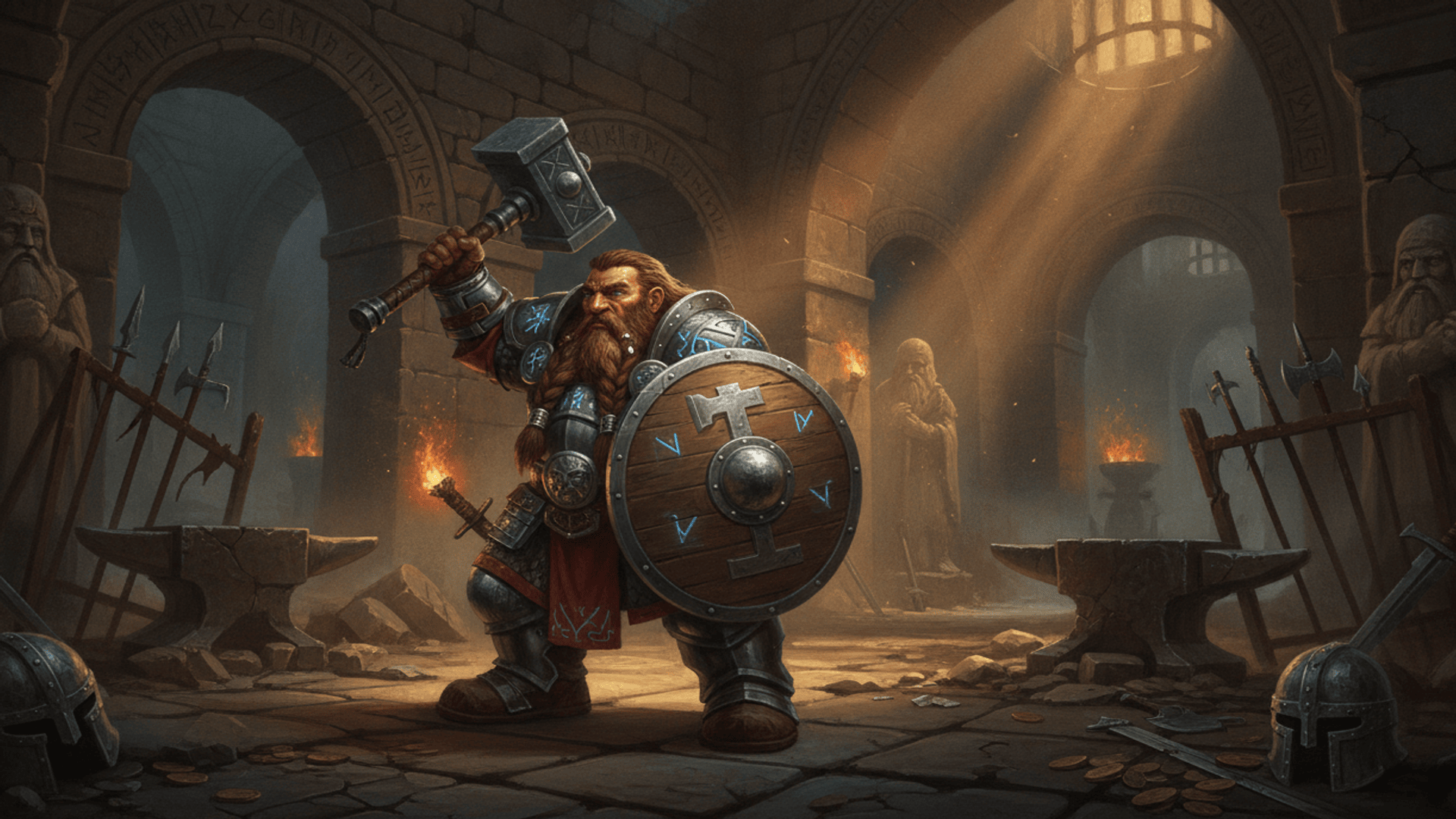
The strategy camera is the classic one. It orbits a point on the ground, and you turn it, tilt it and zoom it. The dungeon camera had to follow a moving body at eye height instead, so the existing camera grew a second mode rather than being replaced: dropping into a hero puts the current angle aside, pulls in close and starts tracking.
The detail worth the post is in coming back out. Releasing the hero restores the angle and the zoom you had, so you get your comfortable strategy view back, but it deliberately does not put the camera back where it was pointing. It re-centres on the character you were just being. Losing sight of your hero the instant you let go is disorienting, and that is the sort of rule you only find by releasing control once and immediately not knowing where you are.
Dungeons also stop you zooming all the way out, because the place has a roof and pulling further back shows you the inside of a ceiling.
Assumption two: sight is a circle
Out on the overworld, every unit reveals a disc around itself. Nothing blocks it. Standing behind a mountain does not hide you, because in a game played from above that never mattered.
A dungeon needs the opposite, so it has its own way of seeing: light is cast out from the hero and walls throw shadows behind them. You see the face of a wall, because you can genuinely see the face of a wall, but nothing behind it. A hero lights twelve tiles of that.
The effect in play is the entire mode. You round a corner and a room appears. Nothing else in the game does that, and nothing else in the game needed it.
Assumption three: a thing that blocks you blocks you once
This is the one that produced a real bug, and it is the most portable thing in the post.
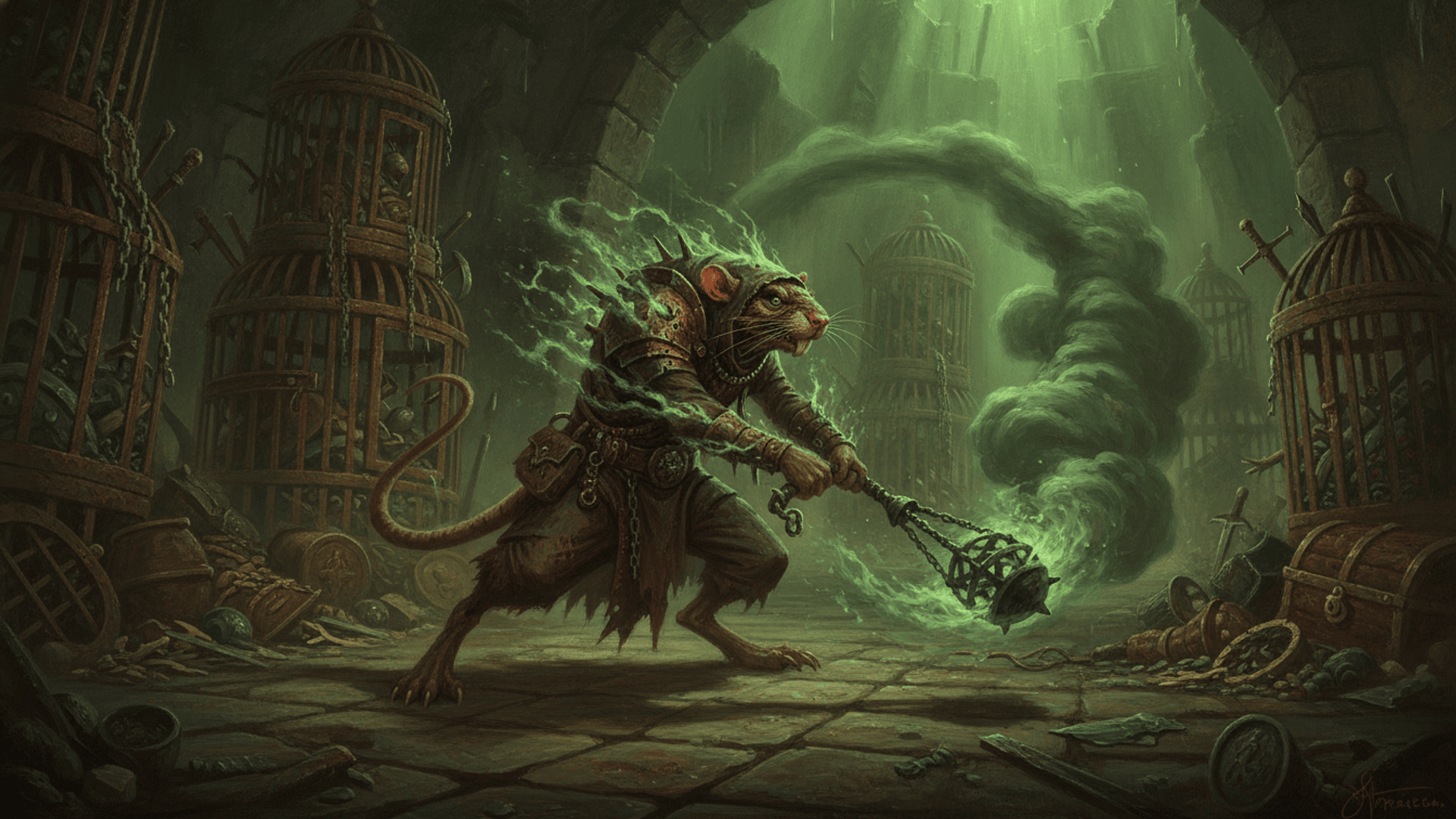
A closed door has to stop four different things: routes being planned through it, units already walking towards it, sight, and arrows. In a strategy game those are four separate ideas that happen to agree with each other, because walls never open and close. A door is the first object in the game that changes which of them it is doing, and if it only stops some of them the failure looks like something else entirely.
The one that bites is the second. Blocking the route planner alone does not tell a unit that is already walking to go and look for another way, so it strolls up to the closed door and stops there forever. That reads to a player like broken pathfinding, and it is actually bookkeeping.
Doors are destructible too, at 250 health and 2 armour, tuned so that something chasing you smashes through in a handful of hits rather than instantly. Closing a door on a thing that has already seen you buys time, not safety.
Assumption four: right-click means attack
Strategy input is "select something, then order it somewhere". Dungeon input is "walk over there and interact with that", and the interaction has to be readable before you commit to it.
So the cursor grew door glyphs, and the rule they follow is that the cursor shows the action, not the state: hovering a closed door shows you the opening icon. Two constraints came with that. It is limited to what you have actually seen, because a cursor that lights up over unexplored darkness would leak exactly the information the shadows exist to withhold. And it is deliberately not limited by distance, because right-clicking a door across the room walks the hero over and opens it on arrival, and hiding the icon until you were already standing there would hide a control that works.
That walk-and-open gives up after four failed attempts to find a route. An unreachable door is a walled-off door, and a hero that walks at it forever is worse than one that shrugs.
Finding the same assumptions in your own game
Putting a second genre inside a working game is mostly not new features. It is a list of things the game has been quietly asserting are always true, and the job is finding them before a player does. Four questions locate most of them, and they are the four sections above with our nouns taken out.
What is the camera actually looking at? A strategy camera looks at a point on the ground. A character camera looks at a moving body at head height. Grow a second mode on the camera you have rather than building a second camera, so one set of controls keeps working, and decide deliberately what leaving the mode restores. Restoring the old angle is right. Restoring the old view target is wrong, because it teleports the player away from the character they were being a moment ago.
Is visibility a distance or an obstruction? If it is a distance, then "you cannot see round the corner" is a different piece of work rather than a smaller number, and no amount of tuning the radius will produce it.
How many separate ways does your game record "you cannot go there"? Count them, because a new obstacle has to set every single one, and missing one will not produce an error. Here it was four, and the one that gets forgotten is the units already in motion.
Which numbers set the rhythm? A strategy game often has none, because the army is the resource and losing it is the cost. A character mode needs a healing rate, a lockout while you are being hit, a ceiling on how much healing can stack up, and at least one recovery action that costs you uninterrupted time. Those four are the entire difference between fight, retreat, recover and just fighting while healing, and they are far cheaper to tune than any amount of work on enemy stats.
What the mode does that the strategy game cannot
Rooms are grown rather than carved. The generator packs varied shapes (halls, rotundas, crosses, L-rooms, octagons, cave blobs, pillared halls, boss arenas) wall to wall with doors between them, instead of running corridors between boxes. Seven dungeon themes and thirteen room themes dress the result, so an armoury reads as an armoury and a kitchen reads as a kitchen. Even there the transferable half is small: pack rooms wall to wall and put doors between them, because corridors are the forgettable part of a dungeon.
Combat had to be re-paced too, because one hero with a full kit and no army is a different balance problem. Four numbers carry it: one second between abilities so you cannot empty the kit in a frame; healing capped at 2% of your maximum health per second, so stacking healing gear saturates instead of trending towards invincible; healing dropping to 15% of that while you have been hit recently; and five seconds as the definition of recently. Eating and drinking is a four second channel, interruptible, out of combat only. That combination is the whole reason the mode has a rhythm of fight, retreat, recover rather than fight while healing.
Win conditions are picked at setup: Clear the Dungeon, Escape the Dungeon, Defeat the Boss, at least one of them, with the boss as the default because it is the headline. Setup also picks who garrisons the place, so the dungeon can be held by any of the 9 playable factions' own troops, spawned from their own barracks and lit by their own torches, rather than by generic monsters. Every hero and theme combination has its own loading painting, which is 224 of them.
The one check worth stealing whole
The generator is tested by building hundreds of dungeons across every difficulty and every theme, and asking five things of each one. That the preview shown on the setup screen is identical every time it is computed. That the map actually carved matches the preview exactly, which pins the picture you chose from to the place you get. That every camp, shop, guard, pool, treasure, altar, boss and exit can be walked to from where you start. That every door has walls either side and floor on both approaches. And that generating a medium dungeon stays well under a twentieth of a second, so the setup screen never stalls.
The reachability one earns its keep, and it is one sentence of intent for any generated space: start from wherever the player starts, spread outwards through everything connected, and require that spread to reach every place the player has to reach. A dungeon where the boss room is sealed behind solid rock is not a crash. It is a run you cannot finish, it looks completely normal until you have explored everything else, and it would cost a player ten minutes to discover.
The Dungeon Crawler sits with the rest of the ways to play on the game modes page, and the campaign has its own version: an optional Borin dungeon reached from the dwarf camp after Act II, where he goes in with his real campaign level, abilities and gear, and carries the loot and the levels back out into the story.
The hero kits that make direct control work at all are covered in designing heroes with no dead time, the gear a run drops is in loot, gear and a gambling den, and the monster camps that fill the rooms are the same neutral content the skirmish maps use, described in filling a map with things worth fighting. The result is a second game sharing one codebase with the first: same units, same combat, same factions garrisoning the rooms, and a completely different thing to do with them. None of it needed new art, and the four assumptions it broke were all things the strategy game had been quietly asserting since before there was anything else to assert them against.


