


Clearing the monsters on the map should be worth doing, and you should be able to find out what a thing actually drops.
That was the ask behind the item system, and the second half is the harder one. Most games ship a drop rate that is a feeling, tuned by eye over twenty kills and left wherever it landed. Here every number a player might care about is a real value you can read off.
Kill a Kobold Digger and it drops something 16% of the time. When it does, the item is picked from a weighted list of five, so a Minor Healing Potion comes out on 6.4% of kills and a Pocket Anvil on 0.8% of them. Those are not estimates. They are the drop chance multiplied by that entry's share of the list.
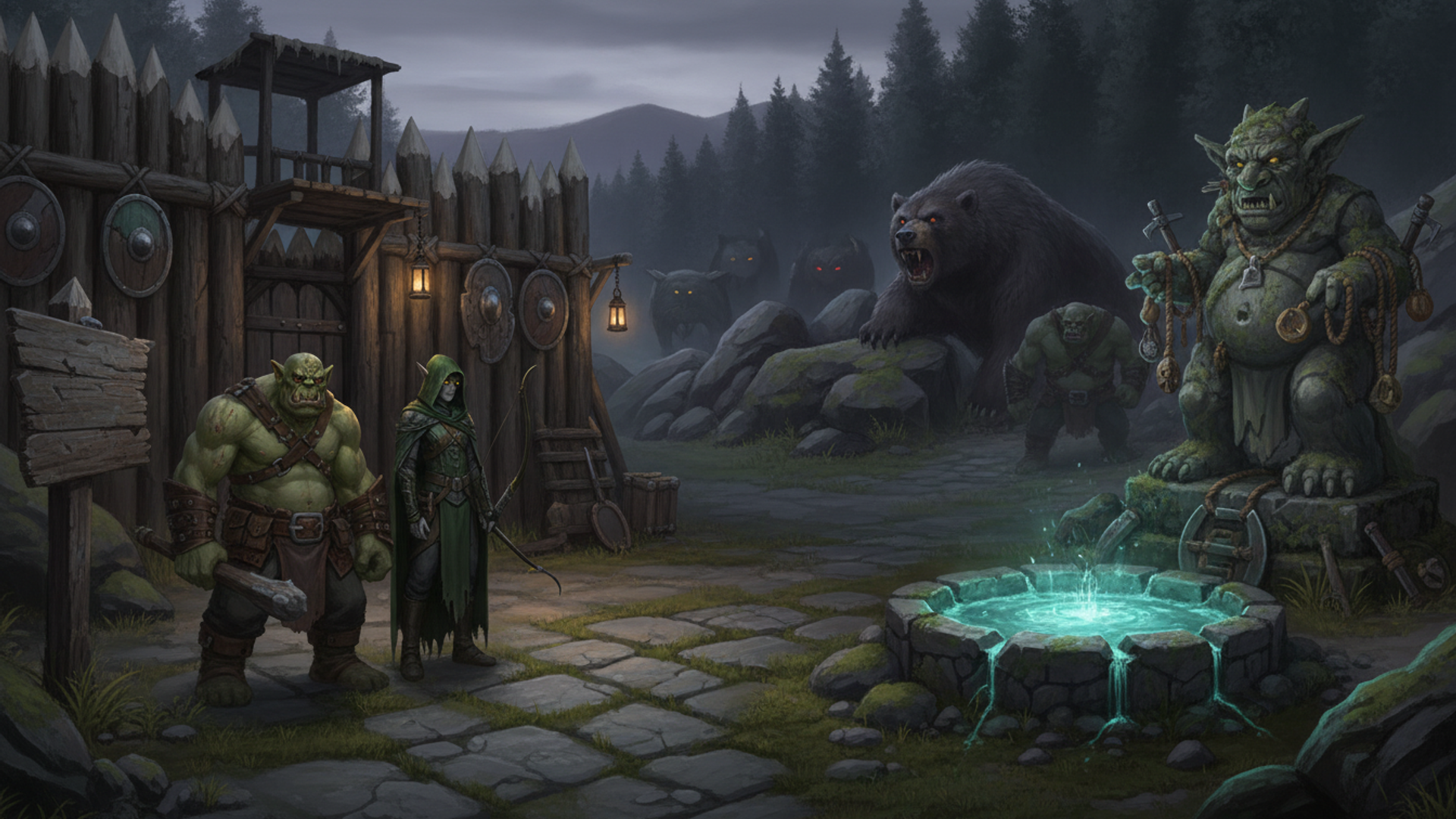
What the game actually contains
There are 135 items: 18 common, 23 uncommon, 59 rare, 23 epic and 12 legendary. 114 of them are wearable gear across eight slots (weapon, helmet, chest, cloak, belt, boots, ring, trinket) and the rest are potions, scrolls, tomes, a town portal and one carried gadget.
Rarity is the tier colour a player already knows: white, green, blue, purple, orange. Gear applies its stats while worn and removes them cleanly when you take it off, which sounds trivial and is the source of half the item bugs in every game that gets it wrong. Fourteen pieces are aura gear, projecting an effect (thorns, damage, armour) onto allies standing near the wearer rather than only onto the wearer.
Where items come from splits cleanly. 95 items are shop-only, 29 are drop-only, 11 are both, and none are unreachable. That last number is the one to check, because an item that exists and can be obtained from nowhere stays invisible until a player goes hunting for it.
Drop tables that resolve to a percentage
Each monster carries a drop chance and a weighted list. The Kobold Digger's five entries happen to total 100, which is why its numbers read straight off. Most do not.
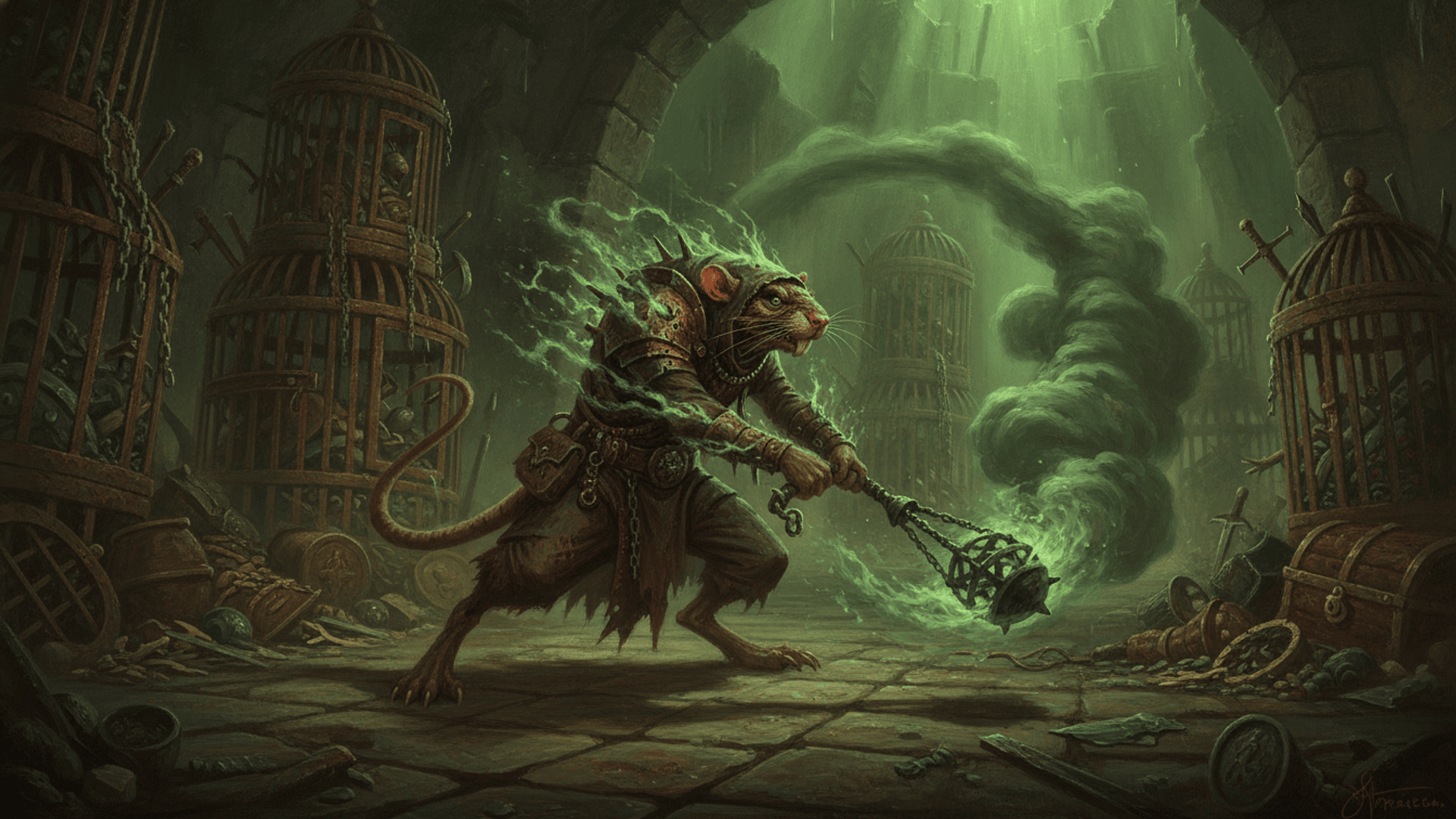
Grommok the Ogre Warlord, the dungeon boss, drops something every single time, from six entries weighted 40, 20, 20, 20, 20, 20. That totals 140, so his signature drop, the Deephold Oathhammer, lands on 28.6% of kills and each of the other five on 14.3%. A boss should always pay out, and which of the six you get should still be a real roll.
Fifteen creatures in the game carry drop tables, and every one of them is a neutral monster. That is deliberate: player factions drop nothing, so the loot economy lives entirely out in the neutral camps rather than in fights against another player. Drop-only gear is also tuned to land 10 to 15% stronger than shop gear of the same rarity, which is what you get for picking a fight with something that was not bothering you.
The tool that makes all of this readable is the item inspector, which lists every item with its icon, rarity, slot, stats, aura, ability, restrictions, buy and sell price, the shops that stock it, and every creature that drops it with the per-kill percentage already worked out.
Two questions a loot table should be able to answer about itself
The transferable part is not the drop rates, it is what a loot table owes you, and it is two questions most loot systems cannot answer without a spreadsheet.
What is the per-kill percentage of this exact item? If the answer needs a designer's judgement, the table is a feeling, and a feeling can be adjusted but not balanced. Any weighted list can produce the number: drop chance multiplied by that entry's share of the total. The discipline is to review the percentage rather than the weight, because "20 out of 140" tells you nothing about play and "14.3% of kills" tells you whether a player will ever see the thing.
Which items can no player reach? Build the list the other way round once: for every item, everywhere it can come from. An item with nothing in that list is content that exists, cost art and review time, and is invisible. An item reachable only from one creature players rarely fight is nearly as bad. Neither shows up in normal reading, because your item list shows you items and your drop tables show you monsters, and the answer is in the join. It is a short piece of work in any project that holds both halves, and it wants doing before the first balance pass rather than after the first complaint.
The shop has to agree with itself on eight machines
The neutral item shop is not a fixed catalogue. It always stocks the essentials (potions, scrolls, tomes, the town portal, cheap common and uncommon gear) so it is never useless, plus three rotating featured relics drawn from the epic and legendary pool. It restocks every ten minutes.
Rotating stock in this game's multiplayer is a determinism problem wearing a shop apron. Every machine runs the whole match for itself rather than being told what happened, so if two of them disagree about what is on the shelf, one player buys something the other believes is not for sale and the two games come apart.
So the featured picks are not random at all. They are computed from the shop's name and which restock this is, which means every machine works out the same three relics without any machine sending anything. What the shop displays and what it will actually sell you come from the same calculation, so those cannot disagree with each other either. Anything that reaches for an ordinary random number here is a bug, and it is the kind that shows up ten minutes into another player's match.
One nice touch falls out of the design. The vault skips any relic that a faction in this match can already buy at its own altar, so it only ever surfaces exotic gear belonging to factions who are not playing.
The gambling den sells nothing
The Gambling Den is a neutral goblin casino that spawns beside each shop. It has no wares at all. It presents the eight equipment slots as eight buttons with a fixed gold price each, and clicking one rolls you a random item for that slot.
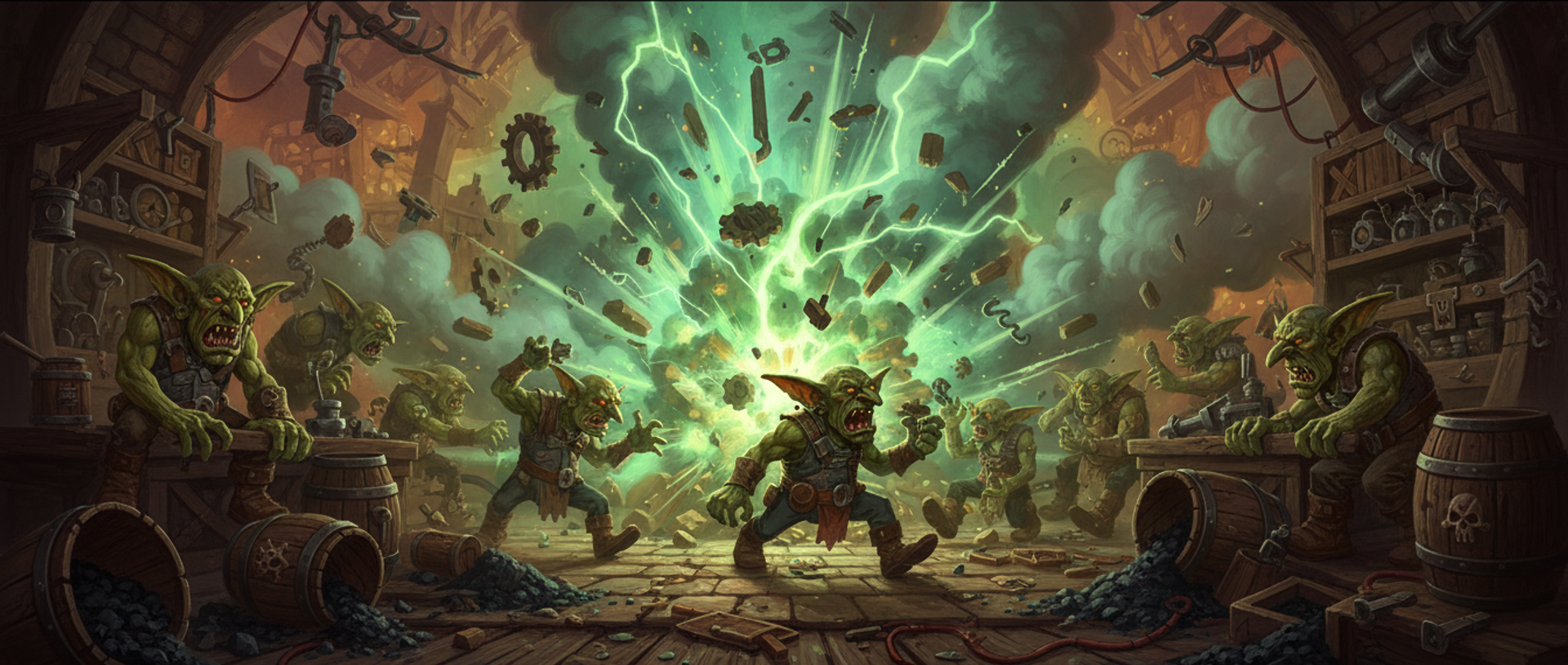
Prices mirror how much each slot matters: weapon 300, chest 280, helmet 220, cloak and belt and boots 200, ring and trinket 180. That scales up by 8% per hero level, so a level 10 hero pays about 1.7 times the base, because what comes out is scaled to the hero too.
The rarity roll is weighted 40 common, 30 uncommon, 18 rare, 9 epic, 3 legendary. Rarity then drives everything else about the item you get:
| Rarity | Bonus properties | Bonus strength |
|---|---|---|
| common | 0 | 1.0 |
| uncommon | 1 | 1.0 |
| rare | 2 | 1.15 |
| epic | 3 | 1.35 |
| legendary | 4 | 1.6 |
Those bonus properties are drawn from separate pools per archetype, and that is the rule that stops the den producing junk. A melee hero can roll attack damage, armour, critical chance, thorns, lifesteal or health regeneration. A caster rolls spell power, mana regeneration, armour, health regeneration or movement speed. A melee weapon never rolls spell power and a cloth robe never rolls raw weapon damage, so a legendary is always a legendary for you.
Stated generally: narrow a random reward down to what the recipient can use before the roll rather than filtering afterwards, because a player reads an unusable legendary as the game being stingy rather than as variance doing its job. The base item is chosen the same way, filtered by slot and by what your hero can actually wield, so a plate-armoured warrior cannot gamble into a staff. When nothing in the catalogue fits, a plain base is made up on the spot and the rolled bonuses carry the power.
At epic and above, and on some rares, a weapon also rolls a thematic elemental enchant that rides along on the hero's attacks: fire, shadow and lightning for melee, frost and lightning and nature for ranged, holy and nature and water for healers. That rider feeds straight into the same counter system described in designing a counter system players can read, and stacks burning and chill exactly the way a researched upgrade does.
You can spin the real thing without launching a match. The Wilds faction page carries the slot and price grid with a sample roller that runs a genuine roll in your browser rather than showing a mock-up, so the odds in the table above are something you can test for yourself before you spend gold on them.
Shops are the floor, gambling is the ceiling
Items bought from a shop are exactly as written: no level, no bonus properties, no on-hit effects. That is the design rather than a gap. A shop is where you go when you need a specific answer to a specific problem and cannot afford variance. The den is where you go when you have gold to burn and want the roll. Drops sit between them, scaled to whatever it was you killed.
The whole catalogue was written out as prose with prices and stats before any of it was real, which is the working pattern described in designing a game in writing before code, and the heroes this gear bolts onto are covered in designing heroes with no dead time.
What holds all three together is the same commitment the post opened on: every number here is a real one you can look up. The drop chances resolve to a percentage, the den's rarity weights are published above, the item inspector lists every source of every item, and the roller on the Wilds page runs a genuine roll rather than a mock-up. A loot system a player can audit is a loot system they can plan around, and planning around it is the entire point of having one.


